


Rocking Toddler Sleep Together
FOR toddlers 18 MONTHS - 3 years
The parent-loved, easy-to-digest digital guide that teaches you exactly how to get your toddler sleeping 10-12 hours through the night independently, without ripping your hair out.

if your toddler’s sleep has made you feel overwhelmed, this guide is for you…
Perfect toddler sleep doesn’t exist, but we can get pretty darn close with the right tools + lots of confidence in our little humans!
The toddler phase can be totally frustrating and confusing because suddenly, our babies have turned into little people with big emotions and LOTS of opinions! It’s easy to feel overwhelmed when your toddler decides they're not interested in this whole "sleeping alone all night" thing.
Whether you’re...
a first-time toddler parent who is tired and frustrated AF looking for some guidance...
a parent who had an amazing sleeper that’s all of a sudden changing things up
a parent with a toddler who generally sleeps well, but has a habit to break (goodbye paci)
a seasoned parent with awesome older sibling sleepers who’s now like what is happening?!
any parent who simply wants to help their toddler become a healthy, independent sleeper
This all-in guide walks you step-by-step through how to get your child to sleep independently, broken into detailed portions that answer ALL your toddler sleep questions, and then some!
Just remember: you’re not alone and help is available! Healthy sleep creates well-adjusted, well-developed, happy kids, and my 18 Months - 3 Years old toddler sleep guide takes the guesswork out so you can feel confident in tackling the toddler sleep hurdle, no matter where you are in the process.
This guide is the ultimate solution if you want to:
Make life-changing shifts to your child’s sleep that positively affect the whole family
Confidently handle bedtime, night wakings, early mornings, sleep transitions, and bumps in the road.
Get your child to sleep independently in their own space (fall asleep & get back to sleep on their own).
Shift away from habits like pacifiers, falling asleep with you, or bedsharing with an exact plan.
Understand how to communicate with your toddler during the sleep training process to limit tears and get results.
Have example routines, schedules, scripts, and troubleshooting guidance that remove the ‘guessing game’ of what to do or say next.
Know exactly what to do to get back on track when common toddler sleep issues pop up, like sleep after travel or illness, or ‘nap strikes.’
Have time to yourself in the evenings and during naps after sleep goes from a major struggle to easy, peasy!
Have a bedtime so easy, anyone can put them down for sleep (avoid parental preference, or enjoy date night knowing your sitter has got this!).

you could be sleeping well in a few nights…
WHEN USING MY 8 easy-to-digest sections with SPECIFIC STEPS & REALISTIC ADVICE
Each section contains specific, practical education and instruction, simple visuals you can screenshot to save on your phone, and a key takeaways roundup at the end of each section to remind you of the most important points! Dive into a sneak peek of everything I cover in my ‘Rocking Toddler Sleep Together’ guide:
-
How your toddler’s development relates to sleep
How much sleep does your toddler actually need?
The toddler wake window
Sleep stages
-
All about sleep dependencies
Toddler sleep cues & how they’re different than babies
Overtired toddlers
Sleep hygiene
-
Toddler brains and development
Praise, rewards, and the magic of purposeful time
Toddler emotions & new situations
Separation anxiety
-
Learning to fall asleep independently
Goal #1: Self-settling
Goal #2: The toddler bedtime routine (plus consistency vs flexibility and giving them control)
Goal #3: Into bed wide awake
-
1-2 Days before you begin
Preparing their body & sleep space
Notes on room sharing
Crib & room safety guidelines
YOUR confidence & boundaries
Your sleep training superpower & comfort script
Recommended products for success
-
My recommended toddler bedtime routine
Bedtime stalling
The sleep training plans
Plan #1: Support with presence (crib or bed)
Plan #2: Leave & return (in a crib)
Plan #3: Leave & respond (in a bed)
Weaning middle-of-the-night feeds
How to handle middle-of-the-night wakings
Possible sleep regressions
Plans at a glance
-
The "12-hour schedule," and why?
Early morning rising & how to solve
The nap training process for each sleep plan
Lengthening short naps
How to handle nap strikes
When and how to drop the last nap
Implementing a toddler quiet hour
Example daily schedule for nap time & quiet hour
Nap time & quiet hour routines
-
Dive into OVER 25 lessons for troubleshooting the most common sleep struggles between 18 months and 3 years old! Some of the topics include:
False starts & split nights
Night lights & fears
Sleep at daycare
Climbing out of the crib
‘Ok to wake’ lights
Developmental milestones
++ SO much more!
-
Attachment science
Secure attachment style
All about crying
Crying & sleep training

Let’s talk success, baby!
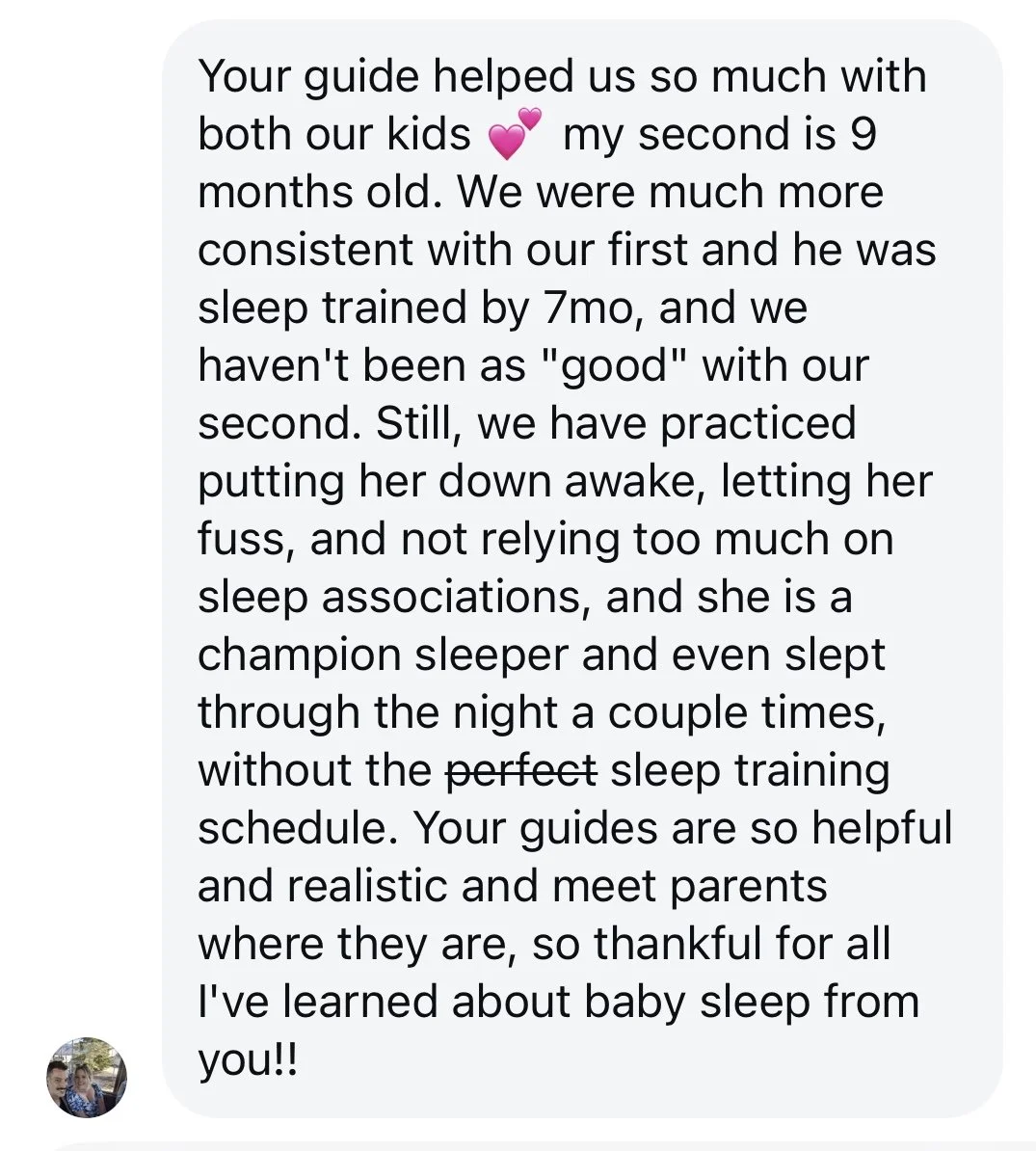
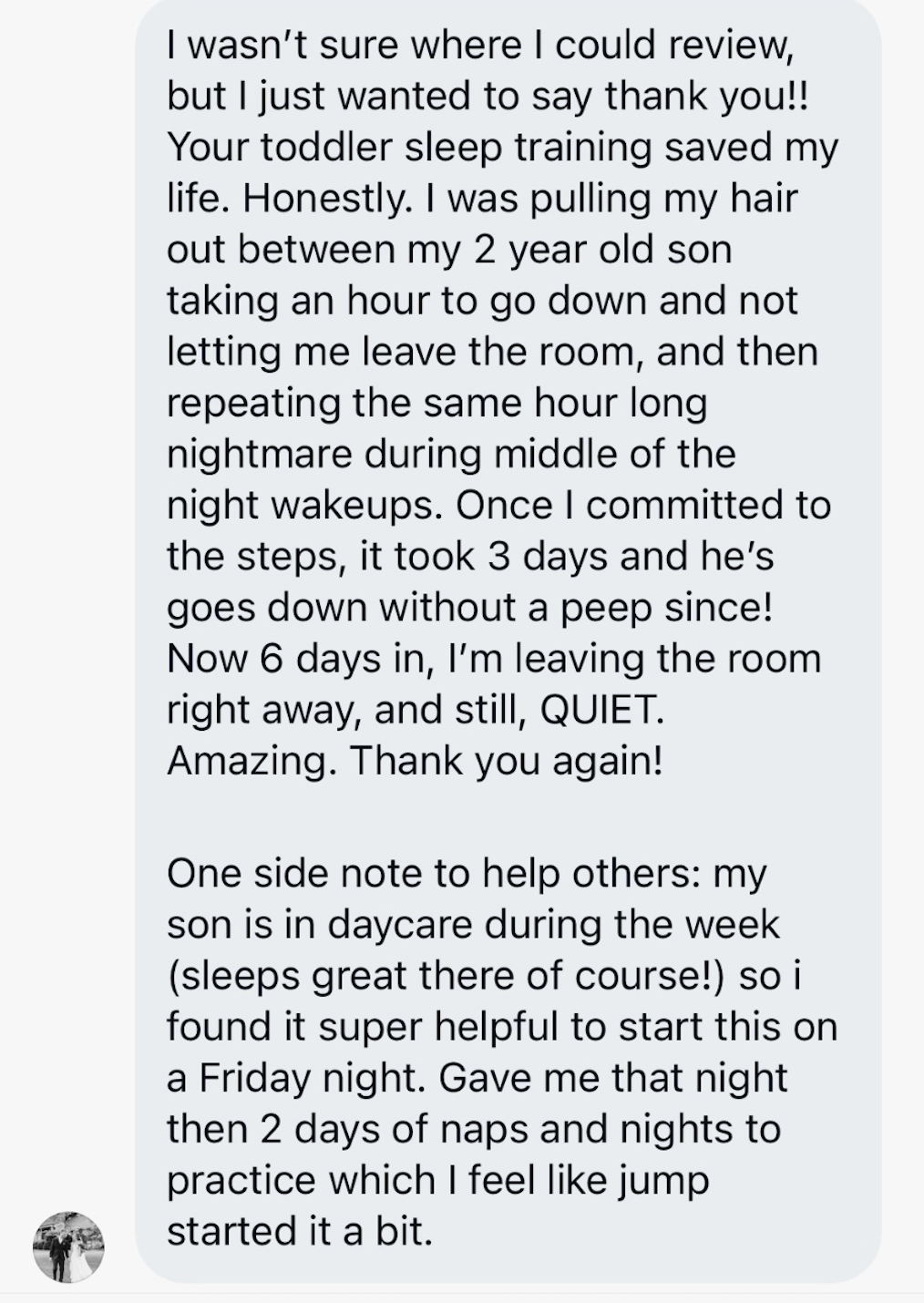
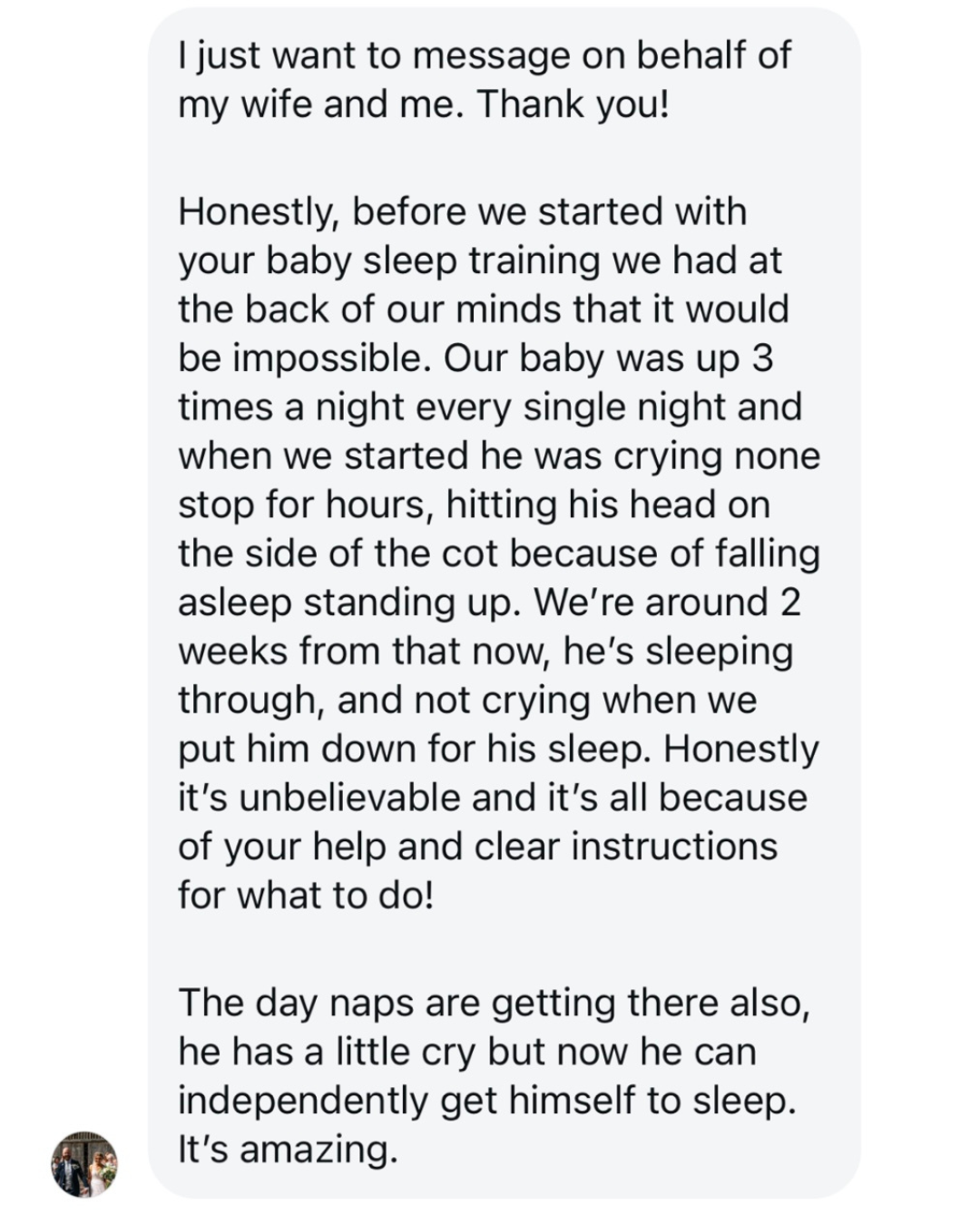
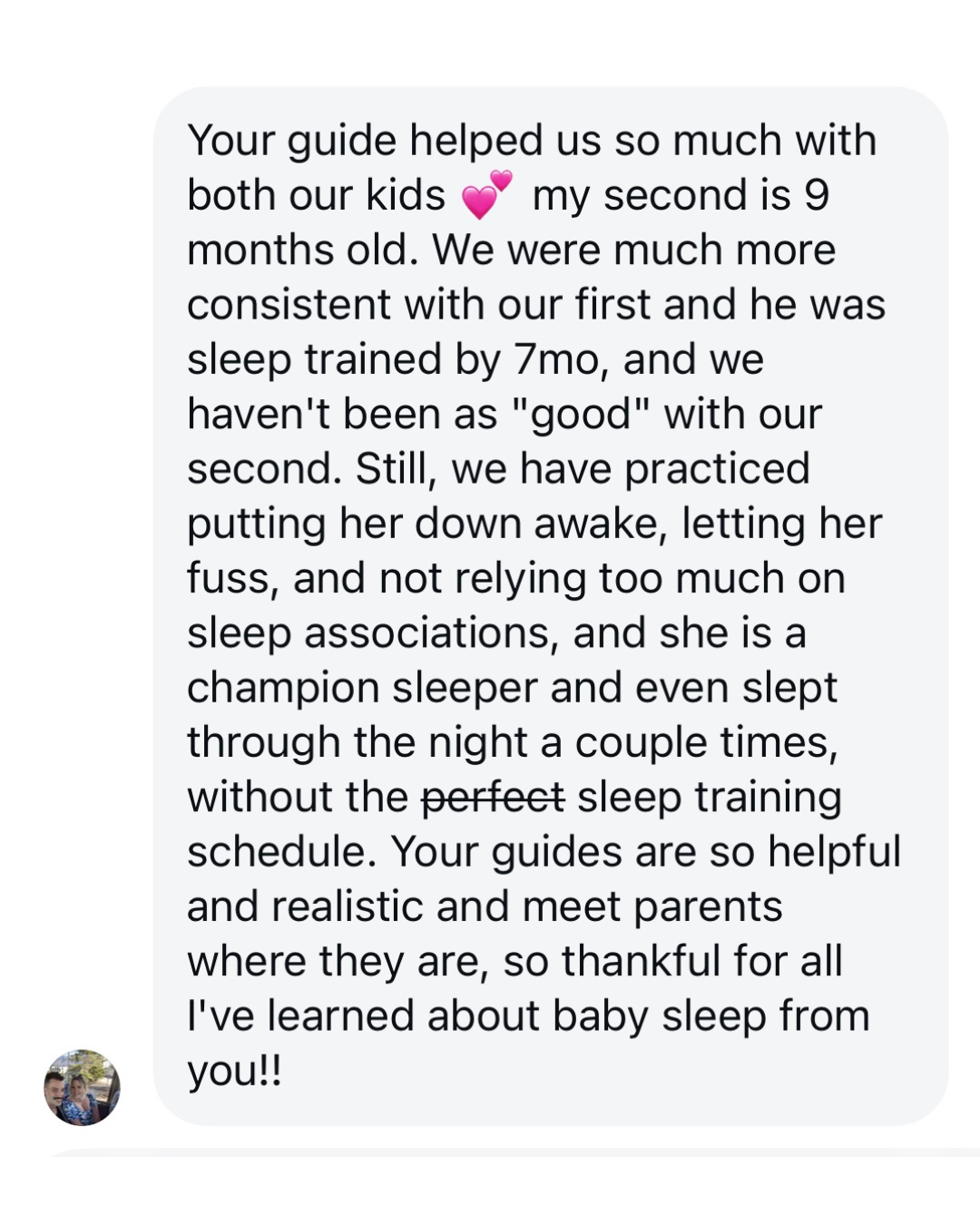
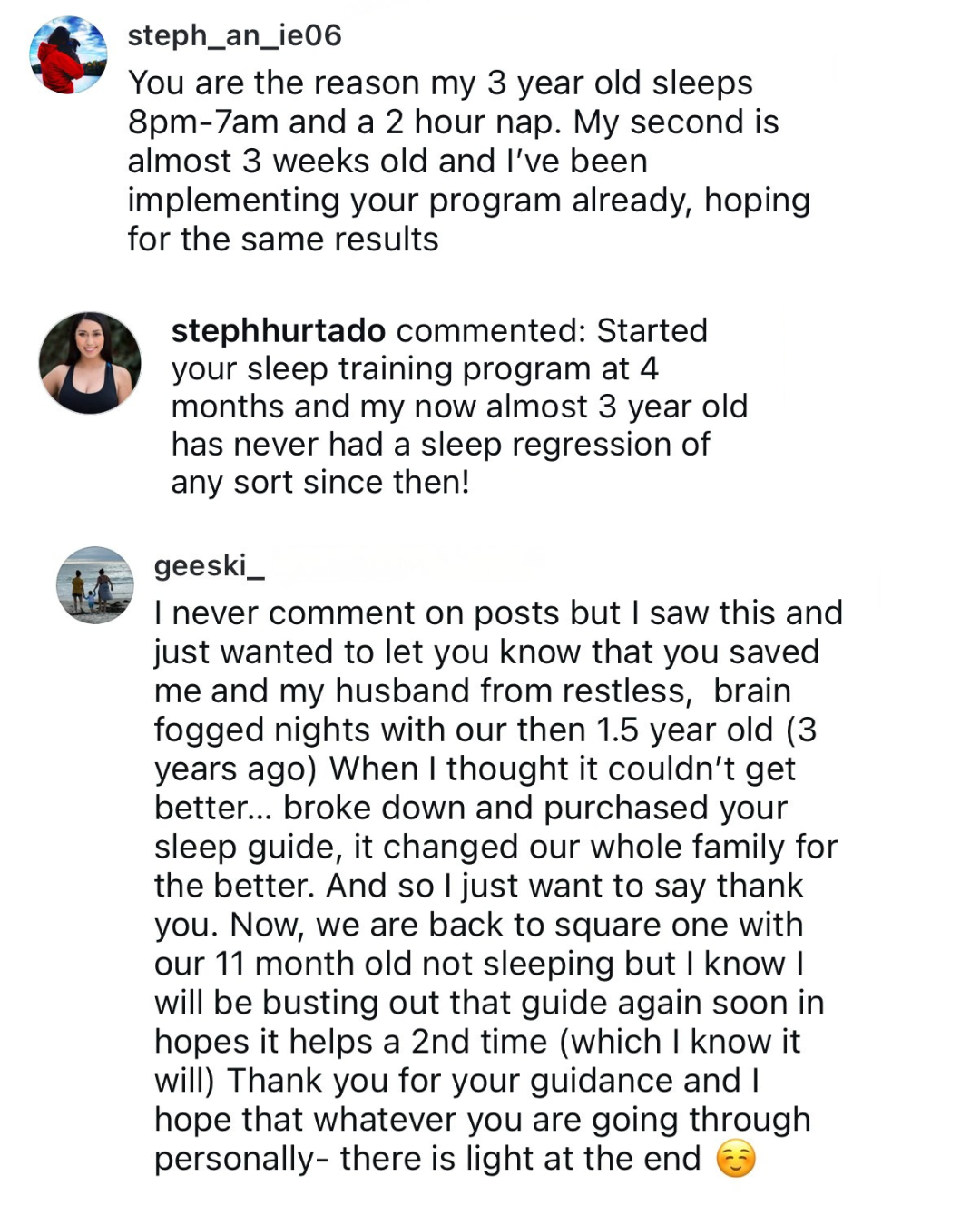
Newborn parents just like you have sent me thousands of DM’s, comments, emails, and story tags to let me know how life-changing my newborn sleep guide was for them!



NOT READY TO GO ALL IN, YET? GET MY:
Free Sleep Tips for Babies 0-18 Months Old

why wait when my baby sleep guide sets you up with:
Responsive tactics that teach your baby independent sleep skills & healthy sleep habits that last a lifetime.
Comprehensive info that covers ideal behaviors, plus tons of troubleshooting guidance.
Lifetime access to convenient digital content you can read at your own pace.
Easy-to-digest info that's practical and can be used tonight.
Expert product recommendations that assist you in achieving your baby's sleep goals.


bundle & save
THE ULTIMATE BABY SLEEP Bundle (0-18 MONTHS)
SAVE 15% when you bundle my 2 top-selling guides! This bundle gives you immediate access to all the tools you need for baby sleep from 0-18 months. It includes access to my 0-3 Months ‘Newborn Sleep BFF’ Guide AND my 4-18 Months ‘Mastering Baby Sleep 101’ Guide!
Frequently Asked Questions
-
No, this is not a video-based guide.
This guide is visual-based PDF with text and imagery to guide you through your journey at your own pace. You can easily search the PDF for keywords, and screenshot important pages for easy reference.
-
Newborn babies between the ages of 0-3 months old. The guidance is gentle, so it could be used on older babies if you know you are not interested in formal sleep training, but want gentle guidance to make progress with sleep. Though, there is no guarantee for sleeping through the night like my 4-18 month sleep training program since this advice is not considered sleep training.
-
Sleep training is a behavioral intervention technique
What does this mean? Most sleep issues for babies are behavioral or learned, meaning that a habit or sleep association was created at some point that the child feels they need in order to sleep (common examples here are feeding to sleep, rocking to sleep, using a pacifier to fall asleep, holding to sleep, etc.). There are various methods for sleep training, but they all result in the behavior being changed by giving the child the opportunity and time to learn to fall asleep with their own techniques, rather than being helped to sleep each time by the caregiver.
-
Yes. This guide offers two responsive sleep training techniques that walk you step-by-step through how to handle bedtime, night wakings, naps, mornings, and the overall sleep schedule to help your child sleep 9-12 hours overnight and lengthen naps as soon as they're developmentally ready.
-
10 Nights or Less.
This guide includes a 10-day program that will have your child sleeping through the night in 10 days, when followed exactly and with 100% consistency. Parents who follow the plan exactly to a T typically see vast improvements in sleep within just 2-3 nights, though babies learn at different speeds and therefore, it can also take up to the full 10 days.
To learn more about complete consistency during sleep training for the most success, visit this blog post: http://bit.ly/3ZYoqMb
-
Probably. Crying is how babies communicate before they can speak.
My sleep training methods are not "cry it out." Though, crying can often occur during this process as your child is learning something new and different. "Cry it out" refers to the Extinction Method, where a child is left to cry in their room alone until morning.
My guide offers two sleep training methods and both are responsive and walk you through options for comforting and responding to your child. One method is a "leave and check" method (similar to the Ferber Method, but not exact), and the other method allows you to stay in the room with your child the entire time.
Remember, crying is not inherently bad, crying itself will not harm your child, and sleep training will not harm your attachment with your child. To learn more about crying, attachment theory, and sleep training, you can visit my blog.
-
Due to the nature of this guide being solely intended for education and in the form of a PDF, I do not offer refunds on my newborn guide.
If you need help clarifying information for more success or have extenuating circumstances, please email hello@sleepfullbaby.com for answers on a case-by-case basis.
-
Possibly!
If your child is on the cusp (around 3 months old) and you know you want to sleep train at 4 months, the bundle would be a great place to start practicing sleep habits before sleep training at 4 months.
Or, If your child is over 4 months old but you’re not ready to sleep train quite yet and looking for more flexible, gentle techniques, the bundle would also be a great choice.
If your child is over 4 months old and you are sure you want to sleep train, I recommend simply buying the 4-18 months course called “Mastering Baby Sleep 101.”


need help with your older toddler?
My ‘Rocking Toddler Sleep Together” Guide for toddlers 18 months - 3 years old is a comprehensive digital guide with everything you need to help your toddler become an independent sleeper, no matter how they’ve slept in the past. You’ll learn:
Basic education on toddler sleep, behavior, and development
Step-by-step sleep training instructions on how to get your child to sleep 9-12 hours through the night independently (fall & get back to sleep without help)
Exactly how to handle tricky toddler sleep issues like bedtime battles and nap strikes
Tools to handle changing sleep needs (dropping naps, developmental milestones, etc.)
How to remove unhelpful sleep dependencies or move away from bed sharing
How to handle weaning night feeds, or other middle-of-night props
Success and troubleshooting tips so you’re never playing a guessing game or giving in to frustration (which is so common!).